


Rabbit Care
Helping your rabbit live a healthy and enriched life
Whether your rabbit lives indoors or outdoors, providing appropriate housing, a balanced diet and plenty of enrichment is essential to their physical and mental wellbeing.
Creating the right home
Safe and spacious housing
Rabbits need plenty of room to move, stretch and explore. Their enclosure should allow them to stand fully on their hind legs and comfortably take several hops.
A well-designed enclosure should include:
- A sheltered area protected from the weather
- A secure sleeping space
- Good ventilation
- Plenty of room to move around
Hutches should be considered a safe resting place rather than your rabbit’s only living space. Daily supervised exercise outside the enclosure is essential.
Indoor or outdoor?
Rabbits can thrive indoors or outdoors when their environment is safe.
Outdoor enclosures should be predator-proof and positioned in a cool, shaded area, as rabbits are highly sensitive to heat and can suffer heat stress during Australian summers.
Indoor rabbits enjoy spending more time with their family, but it’s important to rabbit-proof your home by protecting electrical cords and removing anything they may chew.
Enrichment and companionship
Rabbits are naturally curious and highly social animals.
Whenever possible, rabbits benefit from living with a compatible rabbit companion. Desexing is recommended before introducing rabbits, as it helps reduce territorial behaviours and unwanted litters.
Provide opportunities to explore by offering:
- Cardboard boxes and tunnels
- Safe chew toys
- Apple branches
- Hay-filled toilet rolls
- Supervised playtime outside their enclosure
Keeping rabbits mentally stimulated helps prevent boredom and encourages natural behaviours such as digging, chewing and exploring.
Feeding your rabbit
Hay comes first
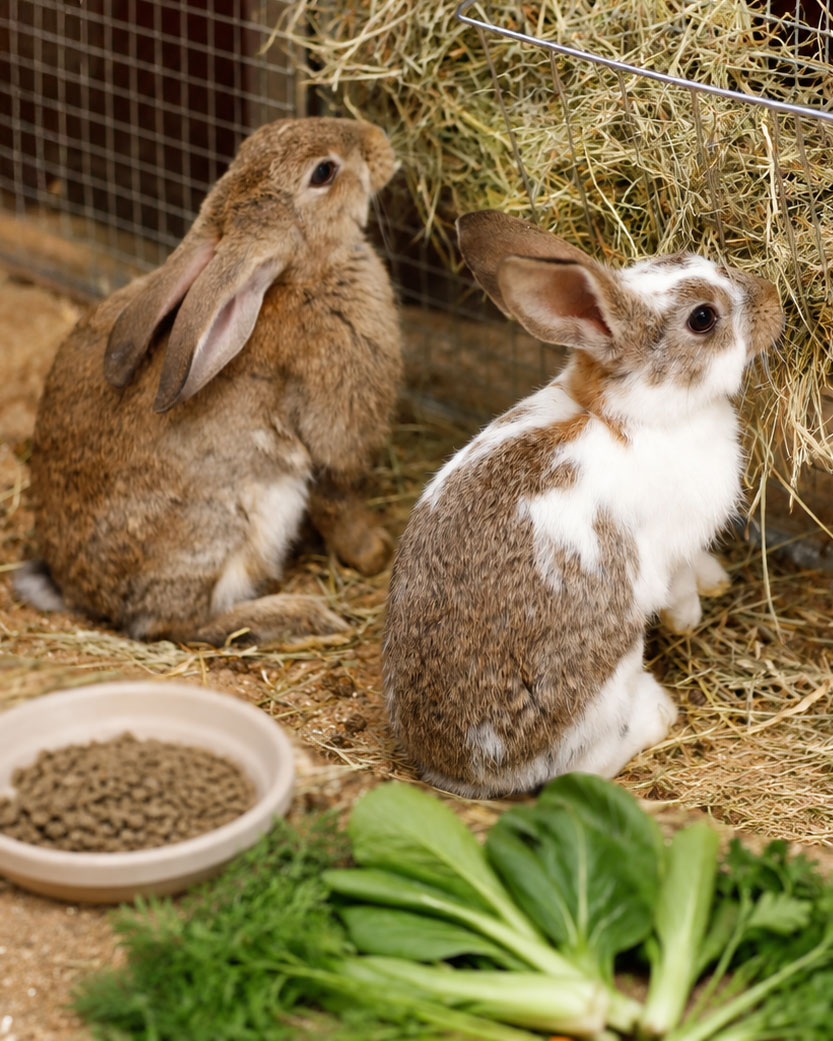
Around 70–80% of your rabbit’s diet should consist of good-quality grass hay, which provides essential fibre for healthy digestion and helps wear down their continuously growing teeth.
Fresh vegetables
Offer a variety of leafy green vegetables each day, such as Asian greens, herbs and broccoli.
Pellets and treats
Pellets should only be fed in small amounts and should never replace hay.
Fruit, carrots and other treats should be offered occasionally and in moderation due to their higher sugar content.
Fresh water
Fresh, clean water should always be available. Many rabbits drink more when both a water bottle and a heavy water bowl are provided.
Grooming and daily care
Regular grooming helps remove loose hair, prevent matting and reduce the risk of hairballs.
It’s also important to:
- Check your rabbit’s eyes, ears and nose for grass seeds or debris.
- Inspect their rear end daily to ensure it is clean and dry.
- Monitor for signs of fly strike, particularly during warmer months.
Long-haired rabbits generally require more frequent grooming than short-haired breeds.
Preventative healthcare
Regular veterinary care helps detect health issues early and keeps your rabbit feeling their best.
Annual health checks
Routine examinations allow us to assess your rabbit’s teeth, nails, weight and overall health.
Vaccination
Vaccination against Rabbit Calicivirus Disease (RHDV) is recommended to help protect your rabbit from this serious and often fatal disease.
Desexing
Desexing is recommended for both male and female rabbits. It helps reduce unwanted behaviours and significantly lowers the risk of reproductive disease, particularly uterine cancer in females.
Parasite prevention
Depending on your rabbit’s lifestyle, parasite prevention may also be recommended. Our team can advise on the safest products for rabbits.